In Part 1 of this post, we looked at the most pervasive and damaging lie about Creativity:
CREATIVITY LIE #1: The Genetics Lie Creativity is Inborn. Aka: I\'m Just Not That Creative
To help refute this common belief that \"some people are just born more creative than others,\" I cited the famous study by George Land showing the radical tendency toward creative downturns as children grow up. This has been, by the way, later supported by equally famous studies by Teresa Amabile and others (that we\'ll look into in future posts) that show clearly that Creativity is a trait we unlearn as we get older - a point supported by comments from many famous creative figures throughout history.
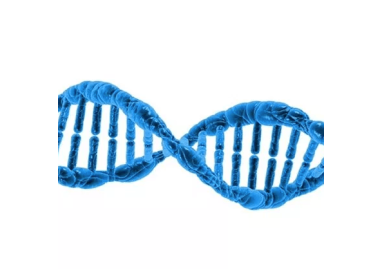
Yet there is further evidence for the devil’s advocate position. A recent study in PLoS ONE found that a particular cluster of genes related to brain plasticity directly correlated with musical creativity. In other words, people who more naturally break and form new connections between cells within the brain were more naturally musical. These people had duplicate DNA strands that affected the processing of serotonin. This seems to bring greater likelihood to genetics as a factor in Beaty’s results. A later study from the Medical University of Vienna seems to strengthen this evidence, finding that higher seretonin levels also increases brain connectivity. So are people who naturally have higher seretonin levels more creative?
Yet there are serious
problems with using these studies to conclude there’s a creativity gene.
First of all, musical
ability is not the same as creativity. There are many very non-musical people
who are extremely creative. And I don’t know anyone who would refute the idea
that some people are more naturally musical than others. Creativity is an
overall capability, while musicality is a very specific skill. I can’t draw to
save my life, and other people I know seem to just have a knack for it without
any training. It does not mean they are more naturally creative than me.
And then just to
really confuse things, there is this study from Cornell University that found
that creative people tend to have a smaller corpus collosum, thus REDUCING
brain connectivity. That study states that this separation of the two brain
halves leads to “the incubation of ideas that are critical for the
divergent-thinking component of creativity” and that it is the momentary
inhibition of this hemispheric independence that accounts for the illumination
that is part of the innovative stage of creativity.”
So which is it? Do
creative people have MORE connected brains, allowing them to switch between
divergent and convergent thinking more rapidly? Or do they have LESS connected
brains, allowing them to incubate ideas in isolation before bringing them
together?
Then there is one of the world’s largest population-based studies on individuals with mental illness, conducted by Sweden’s Karolinska Institute in Stockholm over the past forty years. As part of that, they have discovered that less severe mental illnesses such as bipolar seem to enhance creativity. This does seem to align with empirical experience. Many famous creatives were and are diagnosed bipolar. I’m diagnosed bipolar myself. The study also investigated the siblings of participants with psychiatric disorders but who did not have the same disorder and found that they did share an increased creative ability.
And again – hold your
horses. Isn’t it possible that twins tend to be more creative because they were
raised a certain way? And more importantly - is MORE seretonin an indicator of
higher creativity, as in the Vienna study? Or is LESS seretonin the thing, as
bipolar people exhibit?
Why does it even matter if creativity is genetic? The bottom
line is, if creativity is a matter of nurture, not nature, then any limits on
your creativity are limits you put there yourself over the course of your life.
And thus, you can remove them. Your creativity, in short, is not bound by some
natural affinity you just don’t have. It’s a convenient lie that lets people
off the hook for not being creative enough.
Where the scientific evidence
remains so conflicted I, like many experts, am confident sticking with the insight of
people who live extremely creative lives, and/or who study creativity as their
passion and focus.
Almost universally, such thinkers are very clear that there is
no clear source for an inherited tendency for creativity. Rather, that
creativity is a result of circumstance, and choice.
Michael Michalko, author of numerous books on creativity (http://creativethinking.net) puts it very well. “The
only difference between people who are creative and people who are not is a
simple belief. Creative people believe they are creative. People who believe they
are not creative, are not.”
The lesson is straightforward. Stop saying you just aren’t creative, or creative enough. Get off your ass and start working on your creativity the same way you would study for exams or go to the gym.
Why? For the same reason that I call this Lie the MOST important lie to conquer. And why exactly is it most important? Well, we’ll look at that further in the next installment of this series, when we pick apart Creativity Lie #2.
Over my upcoming blogs, I will look at the top 5 most impactful lies on creativity. The ones that most limit you in becoming more creative, and thus more successful in all aspects of your life.
Report
There was a problem reporting this post.
Block Member?
Please confirm you want to block this member.
You will no longer be able to:
See blocked member's posts
Mention this member in posts
Invite this member to groups
Message this member
Add this member as a connection
Please note:
This action will also remove this member from your connections and send a report to the site admin.
Please allow a few minutes for this process to complete.